
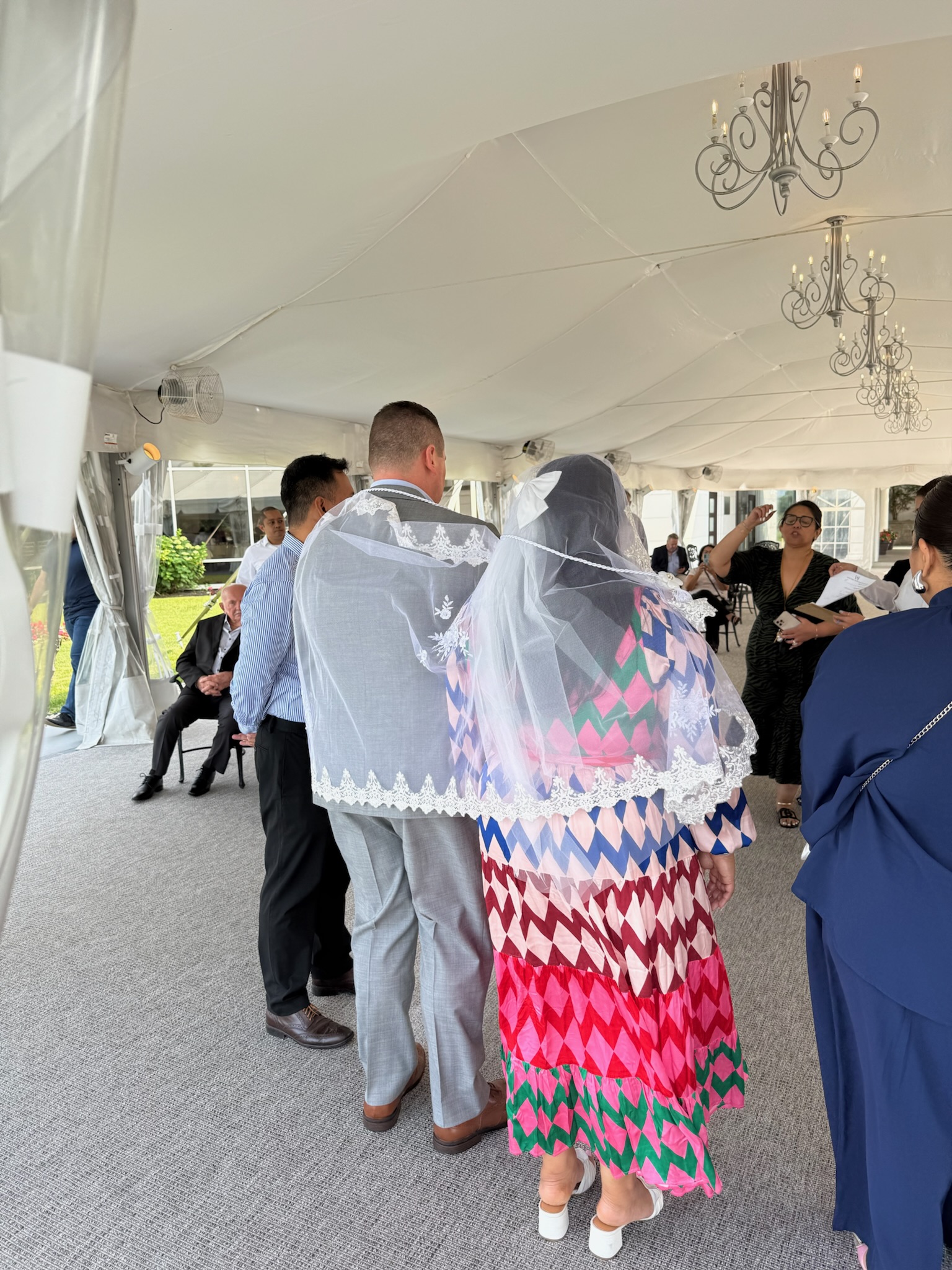
When planning our wedding, it was incredibly important to us to honor and celebrate my heritage — especially the meaningful Filipino wedding traditions that have been passed down through generations. Filipino weddings are rich in symbolism, rooted in family, community, and faith. Whether you’re newly engaged, attending a Filipino wedding for the first time, or just curious about the culture, here’s a guide to some of the most cherished traditions you’ll often see during a Filipino wedding.
Primary & Secondary Sponsors (Ninongs & Ninangs)
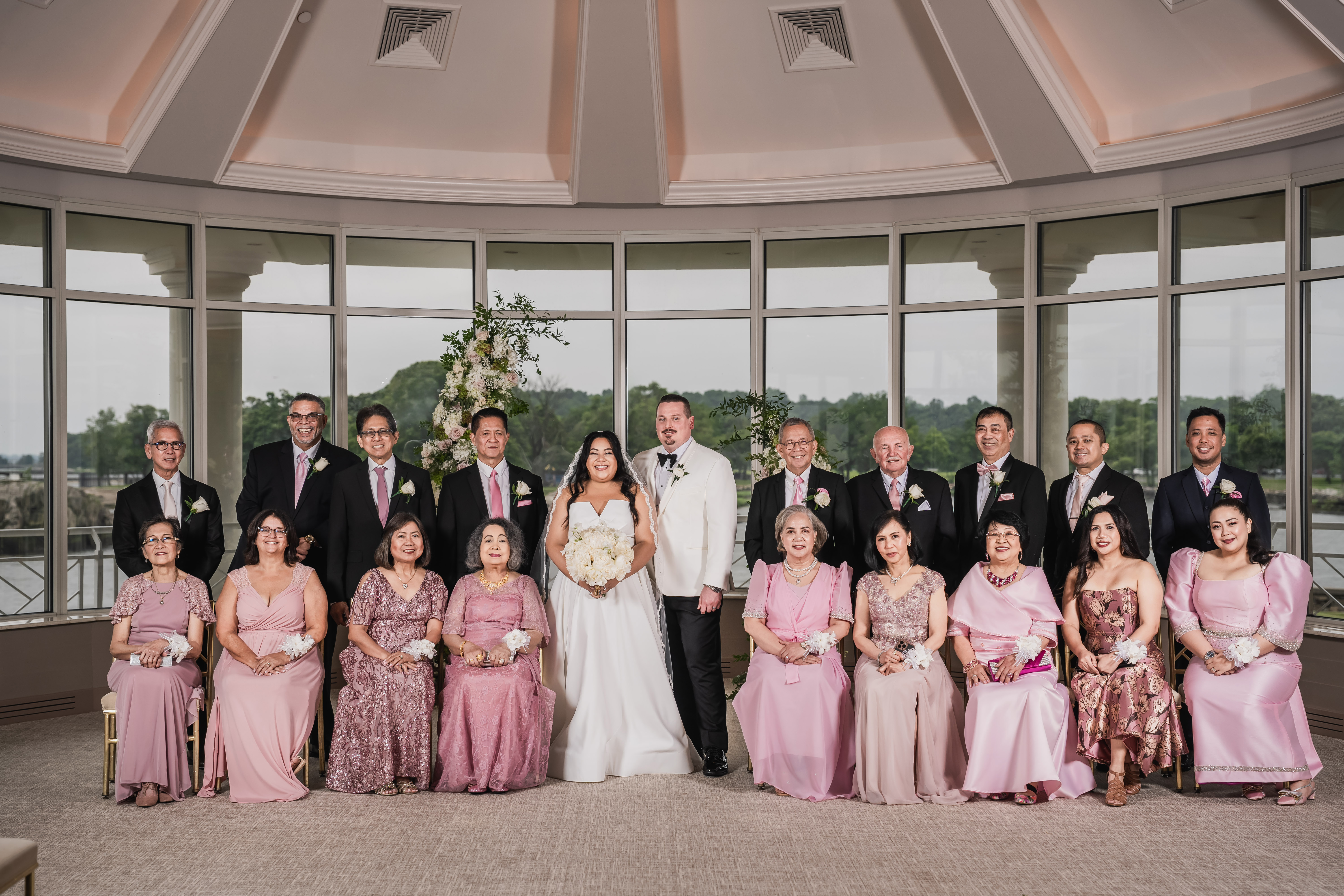
In Filipino culture, weddings aren’t just about two people — they’re about the entire community that supports the couple. That’s where Primary and Secondary Sponsors, or Ninongs and Ninangs, come in.
Primary Sponsors are usually older, respected figures in the couple’s lives — often godparents, mentors, or longtime family friends. They serve as spiritual and moral guides, and their role continues even after the wedding.
Secondary Sponsors participate in specific parts of the ceremony, often helping with the veil, cord, and candles.
We thoughtfully chose our sponsors — some family, some chosen family — and it was one of the most meaningful parts of the planning process.
Mano Po
It is an honoring gesture performed in Filipino culture as a sign of respect and as a way of requesting a blessing from elders, In weddings it’s the parental blessing during the ceremony. The Groom & bride will raise the hand of bride’s parents to their forehead. This is usually done once the bride makes her way to the groom before her father gives her away.


The Arras (Coins)
Known as arras, it is a tradition of exchanging 13 coins during wedding ceremony. Usually handed from the groom to the bride as a symbol of prosperity and one’s oath to provide to each other. Our arras are vintage coins from 1942. In 1942, during WWII as the Japanese approached the Philippines, US officials dumped more that $10 million in silver coins (primarily one-peso coins) into Manila Bay to prevent them from falling into Japanese hands. This act was part of a broader effort to keep valuable assets out of enemy control during the early stages of World War II. During and after the war, some of the coins were recovered, though many were badly corroded from their exposure to saltwater. It is speculated that 3.5 million could still be scattered on the sea floor. Our vintage arras were graciously gifted by one of our sponsors, the Doctors Santos. Our arras was also stored in a vintage holder.
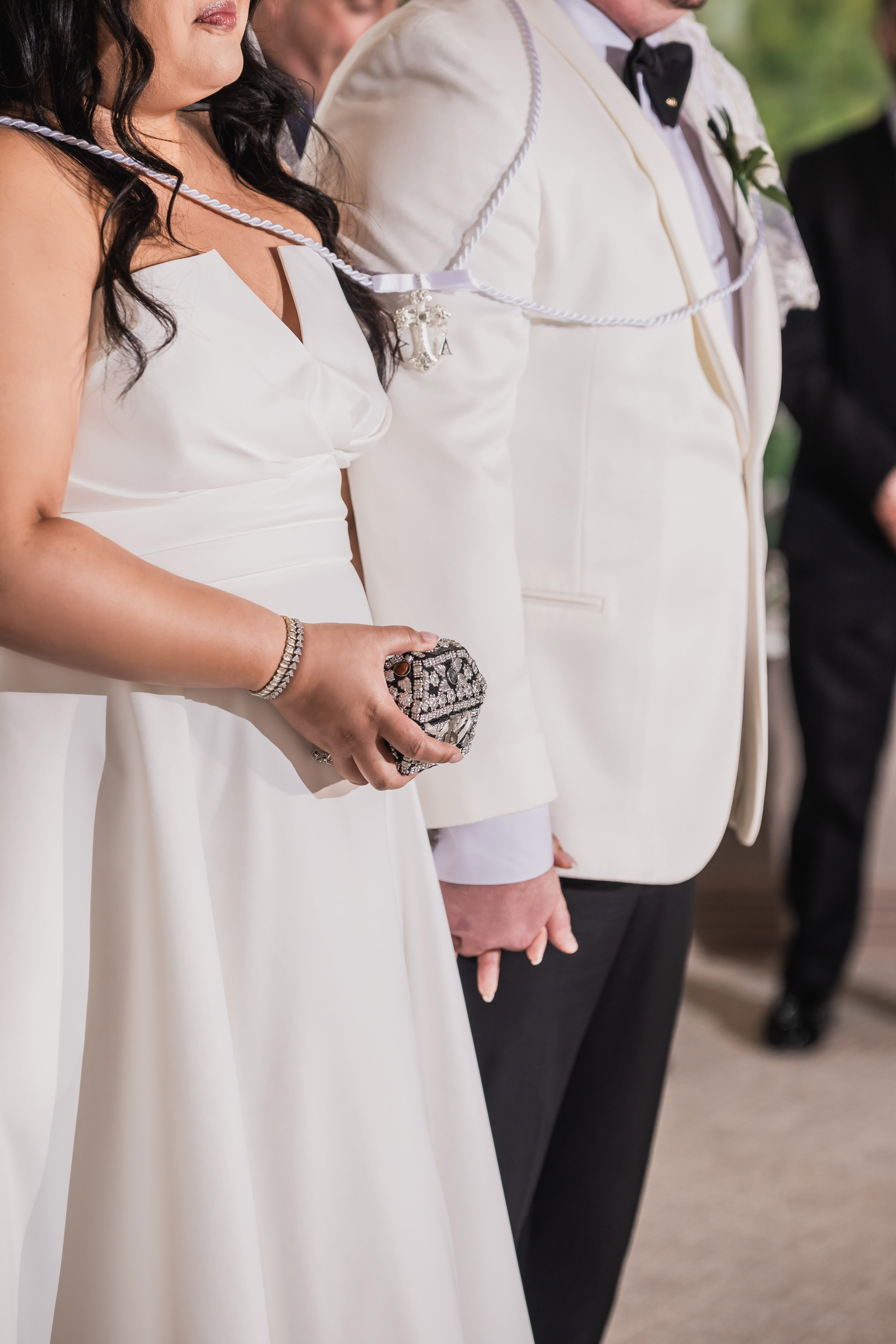
For reference, here’s our script we used for our ceremony: These coins represent not only material possessions but abundant spiritual strength so that they may bless others. They are a reminder that they will mutually support each other, their community, and the world around them. As you hold the coins in your hands, remember that your blessings will no longer be separate but together.
The Veil & Cord Ceremony

This part of the ceremony is deeply symbolic and visually striking. We were so blessed to have custom veil & cord made in the Philippines. Our cord also had our initials on it. Both were also gifted from my aunt, Tita Joyce.
- The Veil is placed and pinned over the bride’s veil and groom’s shoulders, symbolizing being “clothed as one.”
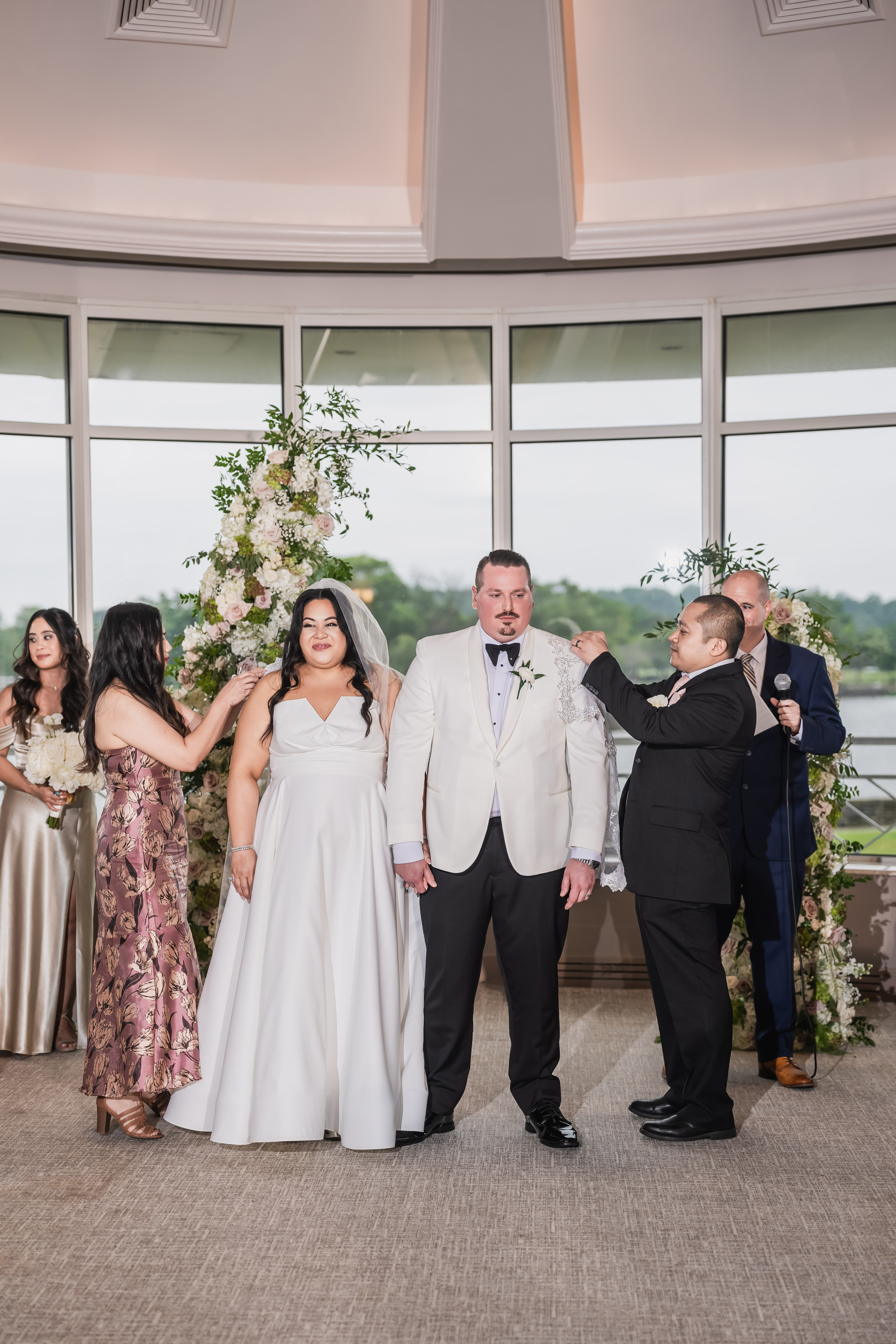
For reference, here’s our script we used for our ceremony: I ask (Veil Sponsor A) and (Veil Sponsor B) to join us and to lay a veil over this couple to signify their union and oneness. The Veil covers this couple to remind them of the love that covers the both of them. Let this be a symbol of the faithful love you have for each other. Let no distance or barrier separate your hearts and minds.
- The Cord (often shaped like a figure 8) is looped around the couple, representing infinity and eternal unity.
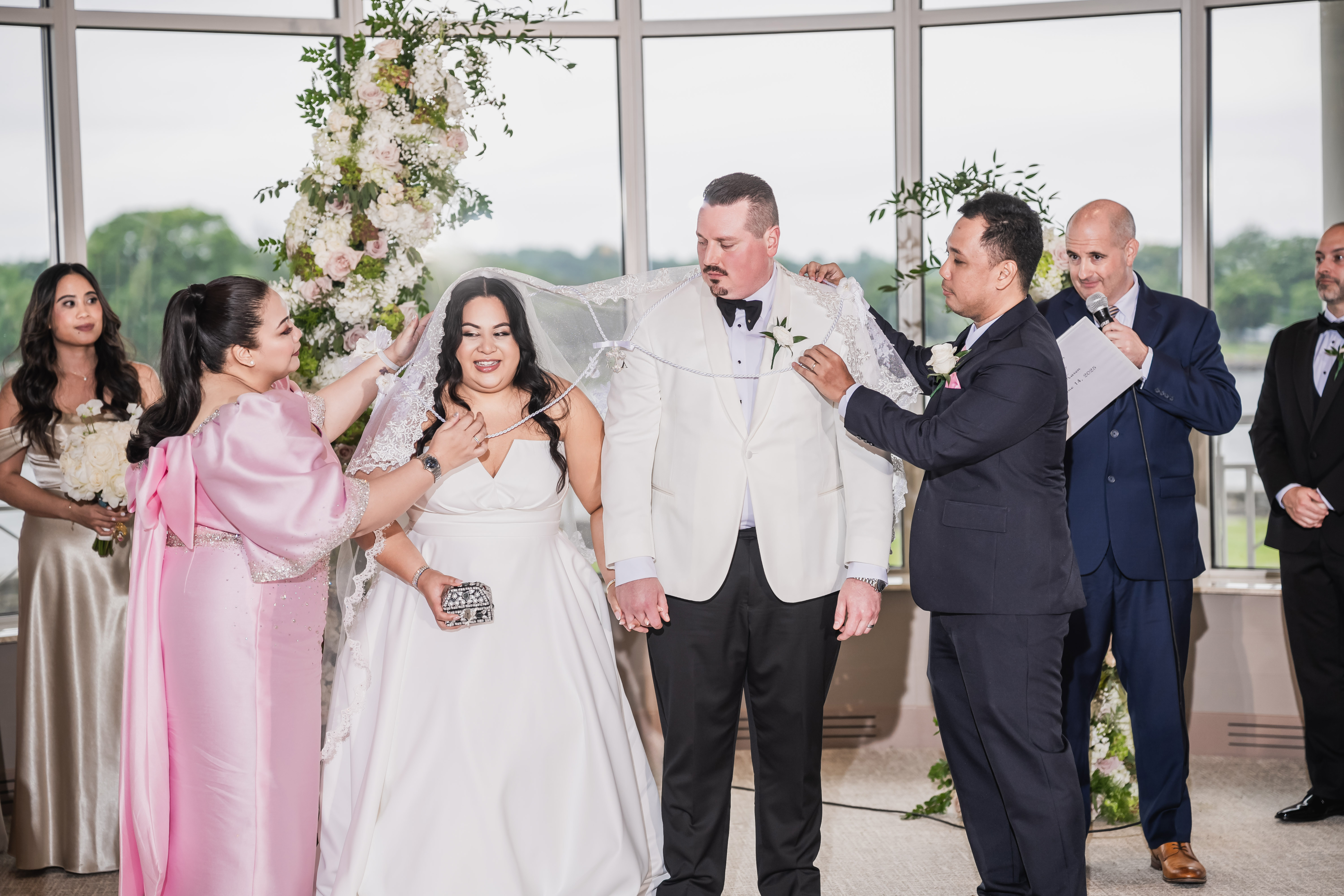

For reference, here’s our script we used for our ceremony: This cord, looped and crossed in the middle,symbolizes the infinite bond of love which brings your hearts and souls together. This bond will keep you strong in the face of adversity. You are no longer two, but one in marriage. May this cord remind you to face your life together courageously and support each other in carrying out your duties and responsibilities as a couple. And, may your love grow stronger and bind you closer together through the years.
While not exclusive to Filipino weddings, the Unity Candle has become a meaningful tradition. The couple lights a single candle from two individual flames, symbolizing their union and the joining of two families. Sometimes, the parents of the bride and groom light the candles to begin the ceremony — another beautiful moment of generational connection.

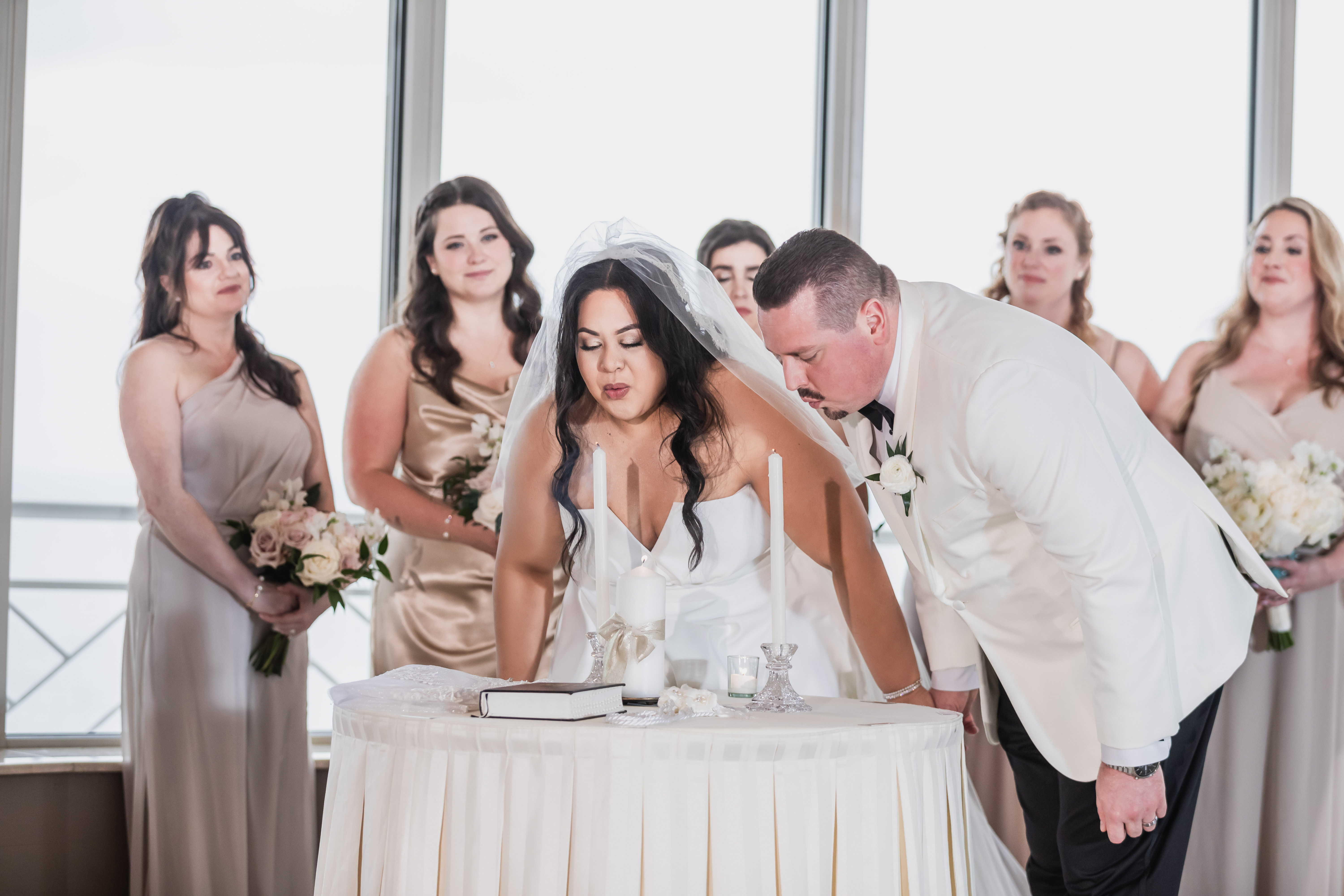
Here’s our script our officiant used:
Officiant to the couple
Today you have decided to share the rest of your lives with each other. This beautiful union is now symbolized by the lighting of the Unity Candle. The individual candles represent all that you are and all that you have been until this moment. Now the candles must come together to create a new light, a light of two people in love.
This candle is also a candle of Commitment because it takes two people working together to keep it ablaze. Love is like a flame; it has the heat of passion, it is constantly changing, its radiance is there for all to see, and it provides light and warmth to each of you. Together you must protect it from being extinguished.
(Partner A) and (Partner B), please light the center candle. As you can see, the center candle is larger because it is a blend of the love, traditions, and experiences you bring.
The partners light the candle as the officiant continues.
Today, as you have lit this candle, may the brightness of the flame shine and guide you throughout your lives together. May this candle burn brightly as a symbol of the strength of your love and commitment to each other. The life that each of you experienced now, individually, will hereafter be united, for the two have become one.
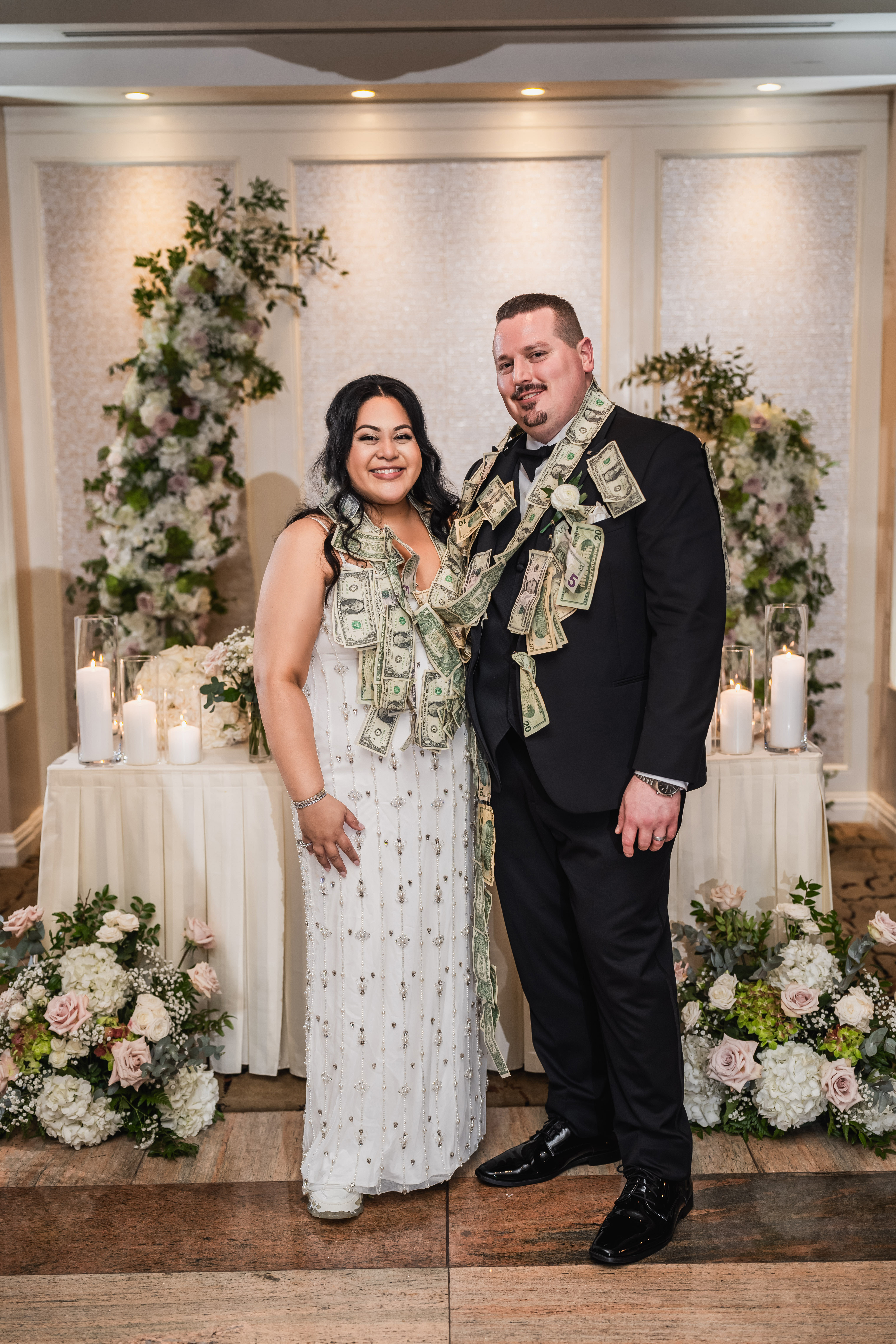
Finally the fun stuff at the reception…A fan-favorite at the reception, the money dance involves guests pinning bills onto the bride and groom as they take turns dancing. It’s a fun, festive way to celebrate — and a symbolic gesture of support for the couple’s future together.
Some families use decorative pins or sashes, others make it into a playful contest. Either way, it’s always full of laughter, love, and generosity.
“Mahal Kita” definition
We had wedding magazines guests could read before the ceremony. We included the following definition of what “Mahal Kita” means.
In Tagalog, “Mahal kita” means “I love you.”
The word ‘mahal’, also means expensive, or of value.
So when you say, “Mahal kita”, not only do you express love, you also express that they are precious, valuable and worth it. It’s no coincidence. Love is costly, not just in money but in the things that matter more. When you love someone, you give them your time, your energy, and your heart. You invest in their happiness, sometimes at the expense of your own. You give without keeping score, and in the end, love asks for everything your patience, your understanding, and your devotion. But despite the cost, we still choose love. Because no matter how mahal it is, the right love is always worth it.
At its core, our wedding was a blending of worlds—honoring the rich traditions of my Filipino heritage while embracing the simplicity and warmth of my husband’s. Every moment, from the cultural rituals to the modern touches, reflected not just who we are as individuals, but who we are as a couple. A Filipino bride and an American groom, two families, two backgrounds—coming together in one celebration of love. In the end, that’s what made our day so unforgettable: it wasn’t just a union of two people, but of cultures, histories, and hearts, proving that love truly knows no boundaries.
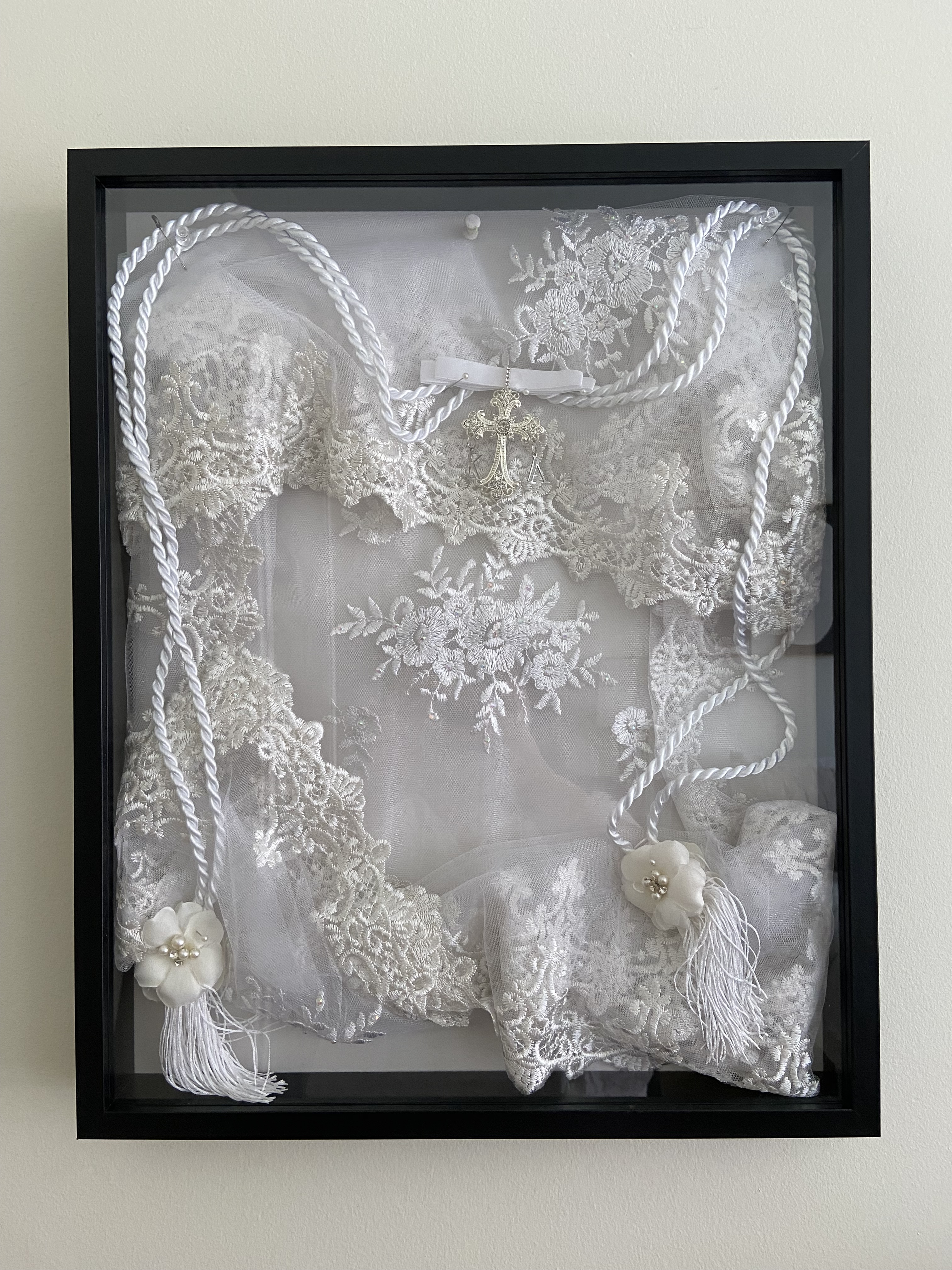
One of the most meaningful keepsakes we chose to preserve from our wedding day was our veil and cord. These symbols of unity and faith held so much significance during our ceremony, and we knew we wanted to keep them displayed in a way that would honor their meaning. Instead of tucking them away in a box or closet, we decided to frame them in a simple shadow box. Not only does it protect the delicate fabric and cord, but it also turns them into a timeless piece of art we can see every day in our home. It’s a beautiful reminder of our vows and the sacred promises we made, and it allows us to carry a piece of our wedding day with us throughout our marriage.
 karenabiogmiller.com
Beautiful photos.
LikeLike